Customers Rarely Buy Step by Step
Many marketing strategies assume that customers make decisions gradually.
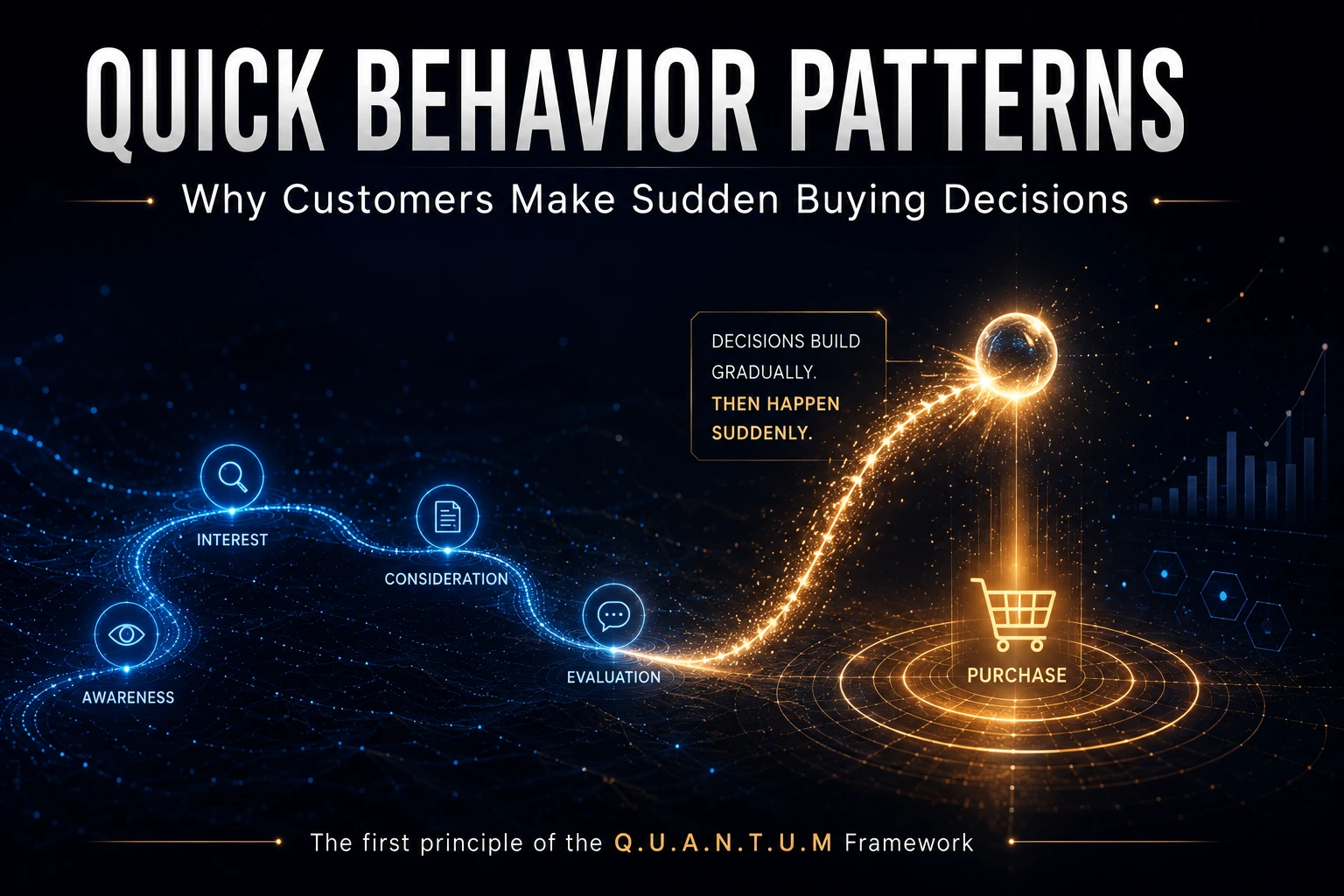
First they become aware.
Then interested.
Then convinced.
Finally, they buy.
Reality is rarely that predictable.
A customer may ignore your brand for weeks.
Read several articles.
Watch a few videos.
Leave your website multiple times.
And then—almost unexpectedly—make a purchase within minutes.
From the outside, the decision appears sudden.
From the inside, it has been quietly forming over time.
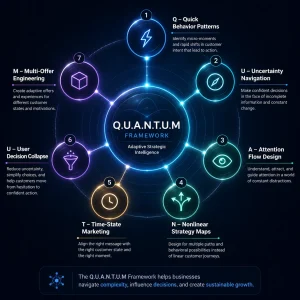
Understanding these moments is one of the central ideas behind the Q.U.A.N.T.U.M Framework.
Decisions Build Slowly—Then Happen Quickly
Buying decisions often resemble pressure building beneath the surface.
Each interaction adds a small amount of confidence.
A helpful article.
A recommendation.
A product demonstration.
A conversation.
A customer review.
None of these moments may trigger an immediate purchase.
Together, however, they gradually reduce uncertainty until one final interaction tips the balance.
The purchase is not caused by a single event.
It emerges from the accumulation of many small influences.
Why Marketers Miss These Moments
Many businesses evaluate campaigns only through aggregate metrics.
Traffic.
Clicks.
Conversion rates.
These numbers are useful.
But they rarely explain when a customer became psychologically ready to act.
The most valuable moment is not the click.
It is the transition from hesitation to commitment.
Recognizing that transition requires observing behavioral patterns rather than isolated metrics.
The First Principle of the Q.U.A.N.T.U.M Framework
Within the framework, the first dimension is:
Q — Quick Behavior Patterns
This principle focuses on identifying moments when customer behavior changes rapidly.
Rather than assuming every prospect moves at the same pace, the framework recognizes that decision speed varies dramatically.
Some customers decide within minutes.
Others take months.
Some appear inactive until the exact moment they are ready.
Effective marketing systems are designed to recognize these differences instead of forcing every customer into the same journey.
High-Intent Moments
Not every visitor is equally ready to buy.
Some people are exploring.
Some are comparing alternatives.
Others have already decided—they simply need reassurance.
Quick Behavior Patterns help businesses identify signals that often indicate rising intent.
Examples include:
- repeated visits to pricing pages
- returning to the same product several times
- downloading educational resources
- spending longer periods on comparison content
- revisiting after receiving an email
- engaging with customer success stories
Individually, these behaviors may appear insignificant.
Collectively, they often signal that a decision is approaching.
The Decision Window
Every purchase has a decision window.
This is the period during which customers become significantly more receptive to taking action.
The window may last:
- several minutes
- several hours
- several days
After it closes, momentum can disappear.
Marketing effectiveness often depends less on persuasion and more on recognizing when this window is open.
Momentum Matters More Than Pressure
Many organizations attempt to increase conversions by increasing pressure.
More urgency.
More discounts.
More notifications.
More advertising.
Sometimes this works.
Often it damages trust.
Quick Behavior Patterns suggest a different approach.
Instead of forcing decisions, marketers should build momentum.
Momentum develops through relevance.
Consistency.
Useful information.
Reduced friction.
Clear value.
Customers naturally move toward action when enough momentum has accumulated.
Designing for Different Decision Speeds
One of the most common mistakes in marketing is assuming every customer moves at the same pace.
Some visitors want immediate answers.
Others need education.
Some require social proof.
Others want technical information.
Effective systems provide multiple pathways instead of a single sequence.
This flexibility increases the probability that customers find what they need at the moment they need it.
Practical Applications
Organizations can apply Quick Behavior Patterns in many areas.
Landing Pages
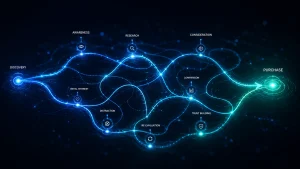
Present different calls-to-action for different levels of readiness.
Email Marketing
Respond to customer behavior rather than fixed schedules.
Content Strategy
Create resources for every stage of the decision process.
Sales Teams
Recognize behavioral signals before initiating conversations.
Customer Experience
Reduce friction at moments of high intent instead of overwhelming visitors with unnecessary choices.
Why This Matters
Customer behavior is becoming increasingly dynamic.
People have access to more information than ever before.
They compare alternatives continuously.
They revisit decisions repeatedly.
Businesses that recognize behavioral shifts early gain an important competitive advantage.
Not because they predict customers perfectly.
But because they respond intelligently when behavior changes.
Beyond Marketing
Quick Behavior Patterns extend beyond marketing campaigns.
They influence:
- product adoption
- customer success
- pricing strategy
- service design
- business growth
Whenever human decisions are involved, recognizing behavioral momentum becomes valuable.
Final Thought
Customers rarely wake up and suddenly decide to buy.
Most decisions are built gradually through a series of interactions, observations, and experiences.
The visible action happens quickly.
The invisible process often takes much longer.
Great marketing is not about creating instant decisions.
It is about recognizing the moment when a decision is ready to happen—and making that moment effortless.
That is the first principle of the Q.U.A.N.T.U.M Framework.